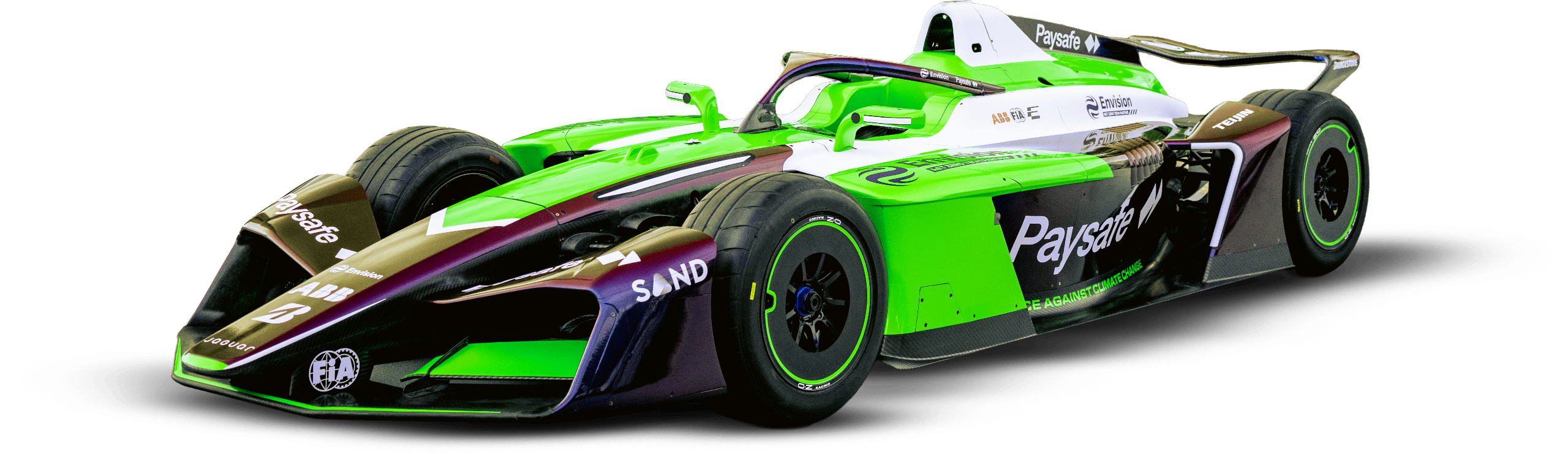
Envision Racing recently officially launched its Race Against Climate Change Advisory Board – a collective of experts from across science, technology, academia, and industry, brought together to accelerate the transition to a net-zero future. The board was created to unite leading voices from different sectors who are already pushing boundaries within their own fields and who, together, can help shape meaningful, cross-industry action on climate.
One of those voices is Joanna Czutkowna who is the CEO of circular fashion consultancy 5Thread. Current researching a PhD in circularity within sports apparel and over 20 years’ experience working with some of the biggest global fashion brands, Jo brings unique insight into decarbonising one of the biggest contributors to the climate crisis: the fashion industry.
In this interview, Jo shares stories from her career, tangible advice for circularising the fashion industry – and why sports apparel specifically needs to be prioritised to make the biggest impact.

Firstly, please introduce yourself and give us an overview of your background.
I’m Joanna Czutkowna, CEO of 5Thread and doctoral researcher specialising in circularity within sports apparel. I’ve worked in the fashion industry for over 20 years, spending most of my career in China overseeing all parts of product development from design through to end of life at major fashion labels. That included visiting over 600 factories and exploring how innovation can be added to their supply chains to make them more efficient, streamlined and sustainable.
When I returned to the UK six years ago to set up my consultancy, initially with the intention of advising fashion brands, as I had done throughout my career, I took an unexpected turn into the world of sport. So although I don’t come from a traditional sports background, with my long experience in fashion and apparel, I was struck by the crossover and by how vast, inefficient, and linear the sports apparel industry is. It quickly became clear that there was an urgent need to transform the system and provide practical support to make sports apparel more sustainable.
What were some of the biggest challenges you saw in sport and how are you supporting organisations at 5Thread?
Let’s take cricket as an example. First of all, the cost of kit and equipment makes it quite prohibitive to play, but on top of that, each season kit is thrown away and replaced with new sponsor logos. And even worse, it’s a sport that is already significantly affected by climate change.
And it’s not just cricket – all sport follows a very linear path. What I focus on is systemic change and helping people make that shift. Finance is one issue, but knowledge should never be a barrier to action.
And there are so many benefits to playing sport and being involved in clubs – it’s a huge part of our culture, community and society – but we need to introduce circular principles in the way sports are managed at the systemic level to ensure they can continue.
It’s a big issue to tackle mainly because so few people are aware of the problem. Everyone is really aware of fast fashion and the challenges this sector presents when it comes to sustainability, but very few are aware of the wastage in sports.
I have worked with a wide range of organisations including UEFA on their Circular Economy Guidelines for Apparel, as well as national governing bodies, start-ups, academia and innovators. Whether we’re creating circular economy guidelines, a sustainable procurement charter, or simply a checklist of low to no-cost actions that will drive change, it all boils down to five key threads (hence the name):
- Circularity – Embedding systems that close the loop and drive circular practices across the supply chain.
- Leadership – Supporting those leading the transition and shaping influence where it matters most.
- Inclusivity – Bringing the right people to the table to ensure progress is collaborative and representative.
- Digital Transformation – Leveraging technology to streamline operations and scale sustainable solutions.
- Supplier Relationships – Building meaningful partnerships that prioritise sustainability and long-term impact.

So cross-industry collaboration is an important part of circularity in sport. Why is the Envision Racing Advisory Board important in driving the climate agenda forward?
The people in the Advisory Board offer such an important cross-section of those at the coal face of the climate agenda. What’s needed now is a clear roadmap for how we’re going to create change as a collective – within sport and further afield.
Envision Racing is in such a unique position to make change, working with amazing partners like Superdry to amplify the work they do to change the industry. But as a small team, there’s only so much you can do yourselves.
What is important is focusing on your area of control and measuring effectively. What are some of the small changes the team can do that could then influence others on a much bigger scale?
What I see a lot of in some of the companies I work with is a cascade effect; small interventions are taken by a company and because it’s personal to staff, it cascades through friends and family and becomes more mainstream.
That’s what Envision Racing could do – and then through the advisory board, influence more and more corporations and policymakers to make changes themselves. The same principle could be followed by all sports brands – do the very best at reducing your own emissions, then use the platform sport gives you, your fan base, to drive much wider action.